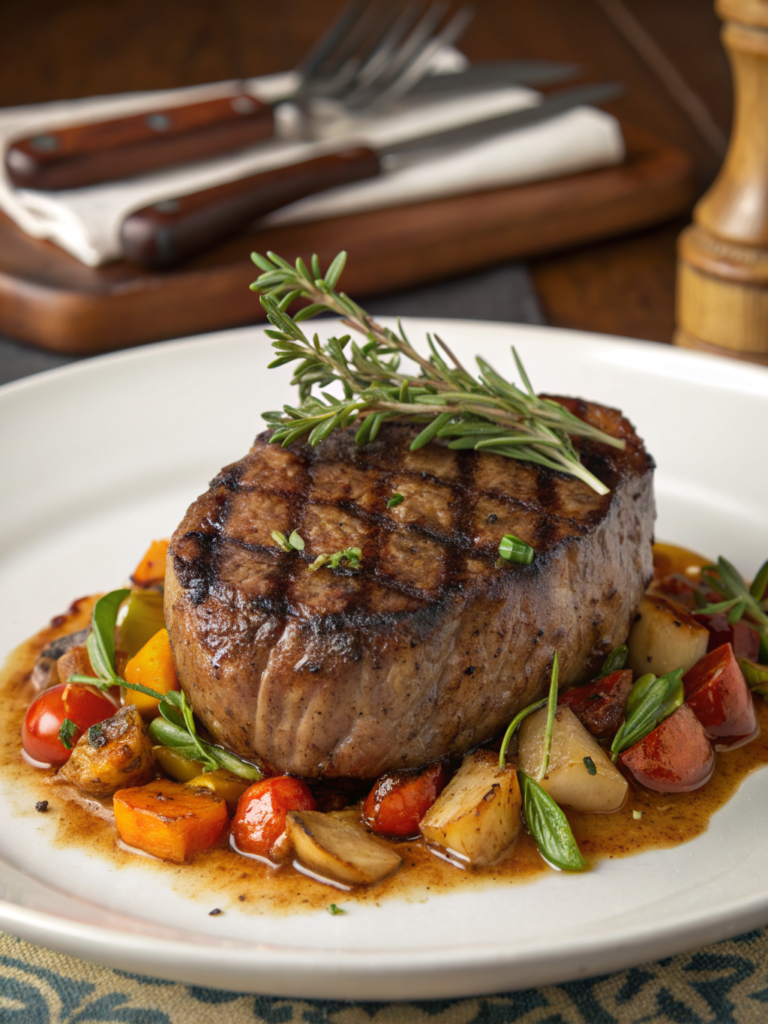
7 Juicy Secrets: Best Flat Iron Steak Recipe
“`html
7 Juicy Secrets: Best Flat Iron Steak Recipe
What if everything you thought you knew about cooking steak at home was holding you back from the most tender, flavorful bite of your life? Most home cooks overlook the flat iron cut entirely — and that’s a serious mistake. This flat iron steak recipe is about to change everything. Packed with bold flavor, surprisingly affordable, and incredibly easy to master, this guide unlocks 7 juicy secrets that will elevate your steak game forever.
The flat iron steak comes from the shoulder of the cow — specifically the top blade muscle. It’s the second most tender cut after the tenderloin, yet it costs a fraction of the price. When prepared correctly, it delivers a rich, beefy flavor with a buttery texture that rivals any premium steakhouse cut. Ready to discover the secrets? Let’s dive in.
Why Flat Iron Steak Deserves a Spot on Your Dinner Table
Flat iron steak has been quietly gaining popularity among chefs and home cooks alike. According to the Beef Checkoff Program, flat iron steak ranks among the top five most popular cuts in the U.S. for good reason — it’s versatile, budget-friendly, and deeply satisfying.
Unlike ribeye or New York strip, flat iron is leaner while still maintaining incredible marbling. This makes it a smarter choice for those who want bold flavor without excessive fat. Whether you’re grilling, pan-searing, or broiling, this cut performs beautifully across cooking methods.
Ingredients List
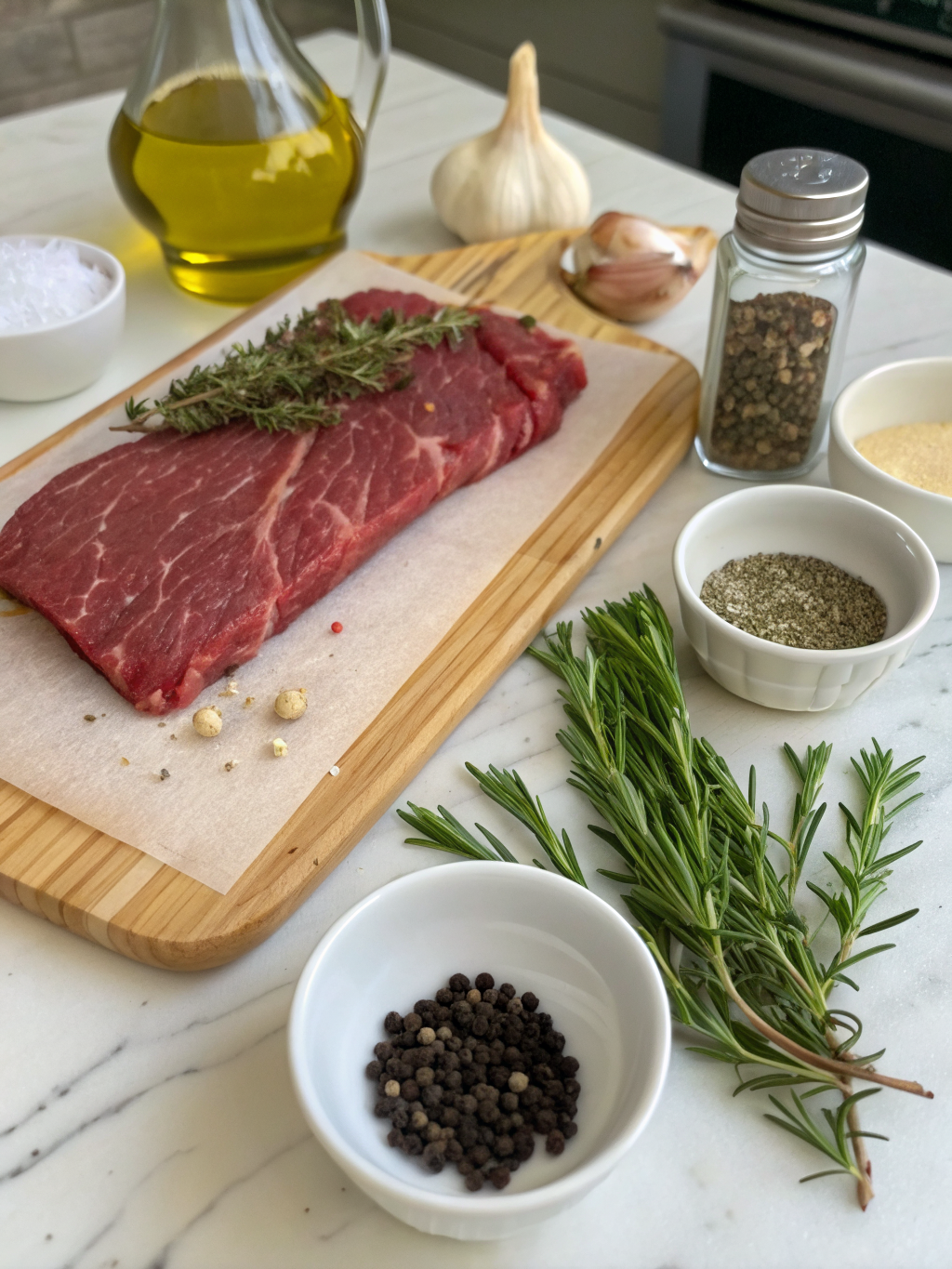
Gather these simple, high-quality ingredients before you begin. The quality of your ingredients directly impacts the final result, so don’t cut corners here.
- 1.5 lbs flat iron steak (look for good marbling and a deep red color)
- 2 tablespoons olive oil (or avocado oil for a higher smoke point)
- 1 teaspoon kosher salt (sea salt works as a substitute)
- 1 teaspoon freshly cracked black pepper
- 1 teaspoon garlic powder (or 3 fresh garlic cloves, minced)
- 1 teaspoon smoked paprika (adds a subtle, smoky depth)
- ½ teaspoon onion powder
- 2 tablespoons unsalted butter (for basting; substitute with ghee for a nuttier flavor)
- 2 sprigs fresh rosemary (thyme works equally well)
- 2 cloves garlic, smashed (for basting aromatics)
Optional marinade add-ons: 2 tablespoons soy sauce, 1 tablespoon Worcestershire sauce, and 1 tablespoon balsamic vinegar. These deepen the umami profile and add a beautiful caramelized crust when seared.
Timing
One of the best things about this flat iron steak recipe is how quickly it comes together. You don’t need hours in the kitchen to produce a restaurant-quality result.
- Prep Time: 10 minutes (plus 30 minutes for optional marinating)
- Cook Time: 10–12 minutes
- Resting Time: 5–10 minutes
- Total Time: Approximately 55 minutes (with marinating) or just 25 minutes without
That’s roughly 30% less time than the average steak recipe that calls for extended marinating or slow-roasting techniques. This makes it perfect for weeknight dinners without sacrificing any flavor.
Step-by-Step Instructions
Step 1: Prepare and Season the Steak
Remove the flat iron steak from the refrigerator at least 30 minutes before cooking. Allowing it to reach room temperature ensures even cooking throughout. Pat it completely dry with paper towels — moisture is the enemy of a good sear. Rub the steak generously with olive oil, then coat evenly with salt, pepper, garlic powder, smoked paprika, and onion powder.
Step 2: Optional — Marinate for Maximum Flavor
If time allows, combine soy sauce, Worcestershire sauce, and balsamic vinegar in a zip-lock bag. Add the seasoned steak and marinate in the refrigerator for 30 minutes to 2 hours. Don’t exceed 4 hours — the acid can begin to break down the meat’s texture, making it mushy rather than tender.
Step 3: Preheat Your Cooking Surface
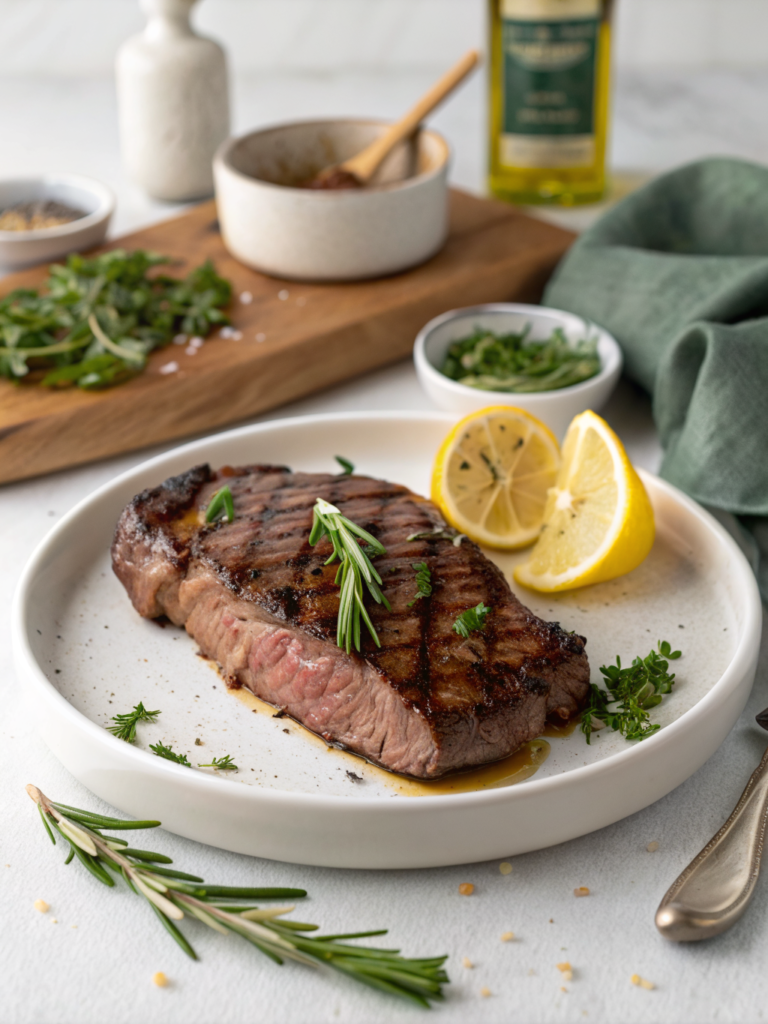
Heat a cast-iron skillet or grill over high heat until it’s smoking hot — this is non-negotiable. A properly preheated surface creates the Maillard reaction, which is responsible for that gorgeous, caramelized crust. If you’re following a grilled flat iron steak recipe, preheat your grill to 450–500°F for optimal results.
Step 4: Sear the Steak
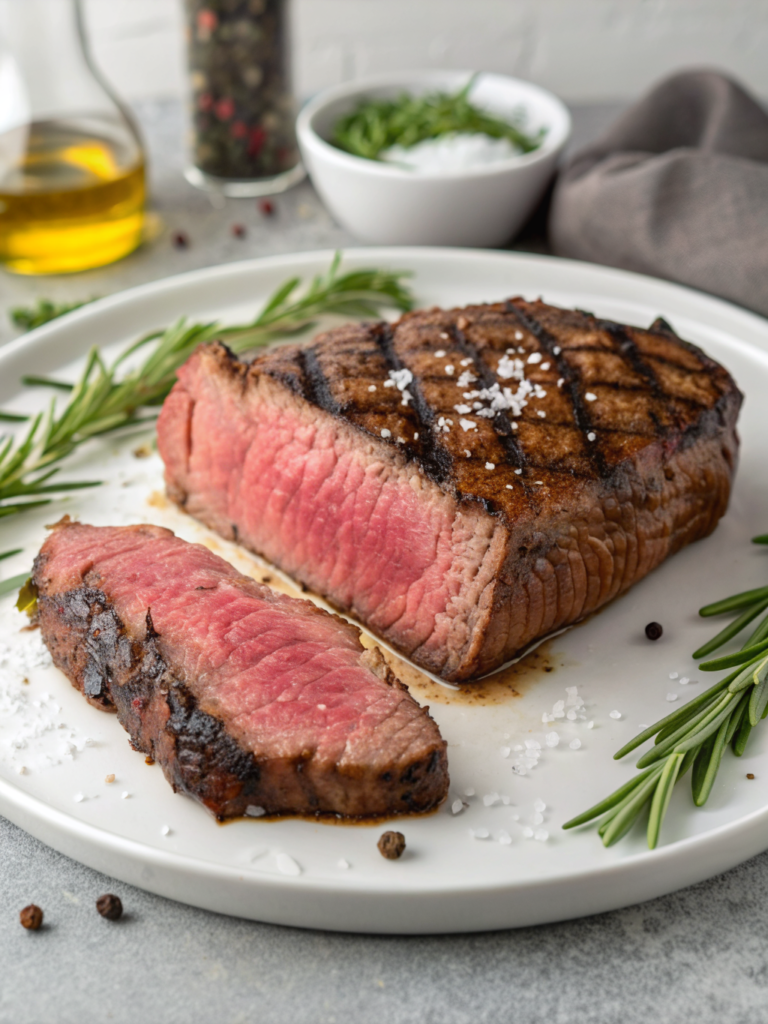
Place the steak on the hot surface and resist the urge to move it. Sear for 4–5 minutes on the first side without touching it. Flip once and cook for another 3–4 minutes for medium-rare (internal temperature of 130–135°F). Use a meat thermometer — it’s the single most reliable tool for perfect doneness every time.
Step 5: Baste with Butter and Aromatics
During the last 2 minutes of cooking, add butter, smashed garlic cloves, and rosemary sprigs to the pan. Tilt the pan slightly and use a spoon to continuously baste the steak with the melted, aromatic butter. This technique, borrowed from professional kitchens, adds incredible depth and richness to every bite.
Step 6: Rest the Steak
Transfer the steak to a cutting board and tent it loosely with aluminum foil. Let it rest for at least 5–10 minutes. Resting allows the juices to redistribute throughout the meat — skipping this step means losing up to 40% of those precious juices the moment you cut into it.
Step 7: Slice Against the Grain
This is the final and most critical secret. Identify the direction of the muscle fibers and slice perpendicular to them — this is called cutting against the grain. It shortens the muscle fibers, making each bite dramatically more tender. Slice at a slight angle for beautiful, restaurant-style presentation.
Nutritional Information
Flat iron steak is not only delicious — it’s also a nutritional powerhouse. The following values are based on a 6 oz (170g) serving, cooked without the optional marinade.
- Calories: 320 kcal
- Protein: 38g
- Total Fat: 18g (Saturated Fat: 7g)
- Cholesterol: 115mg
- Sodium: 480mg
- Iron: 3.2mg (18% of Daily Value)
- Zinc: 7.4mg (67% of Daily Value)
- Vitamin B12: 2.8mcg (117% of Daily Value)
With 38 grams of protein per serving, flat iron steak is an excellent choice for muscle recovery and satiety. It’s also rich in zinc and B12, two nutrients commonly deficient in Western diets. Compared to ribeye, flat iron contains approximately 25% less saturated fat, making it a smarter choice for heart-conscious eaters.
Healthier Alternatives for the Recipe
This recipe is already relatively lean, but there are several smart modifications you can make to boost its nutritional profile even further without compromising on flavor.
- Reduce sodium: Use low-sodium soy sauce and reduce added salt by half. Boost flavor with fresh herbs like rosemary, thyme, and oregano instead.
- Replace butter: Swap butter for extra-virgin olive oil or avocado oil during basting. Both provide heart-healthy monounsaturated fats.
- Go dairy-free: Use coconut oil or a plant-based butter alternative for a completely dairy-free version.
- Lower-carb marinade: Replace balsamic vinegar with apple cider vinegar to reduce sugar content while maintaining acidity.
- Keto-friendly: This recipe is naturally low-carb. Serve with cauliflower mash instead of potatoes for a fully keto-compliant meal.
- Paleo adaptation: Skip the soy sauce and use coconut aminos instead — it delivers similar umami depth with no soy or gluten.
Serving Suggestions
The beauty of this flat iron steak recipe is its incredible versatility. It pairs beautifully with a wide range of sides and sauces, making it suitable for everything from casual weeknight dinners to impressive dinner party spreads.
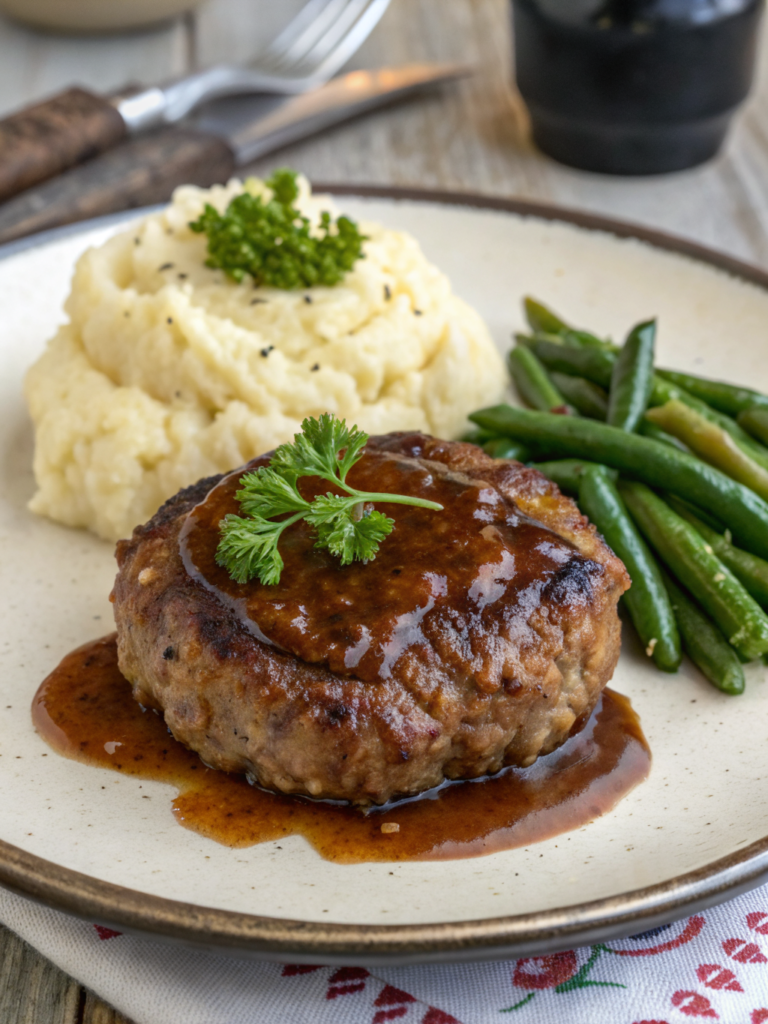
- Classic steakhouse style: Serve alongside garlic mashed potatoes, roasted asparagus, and a red wine reduction sauce.
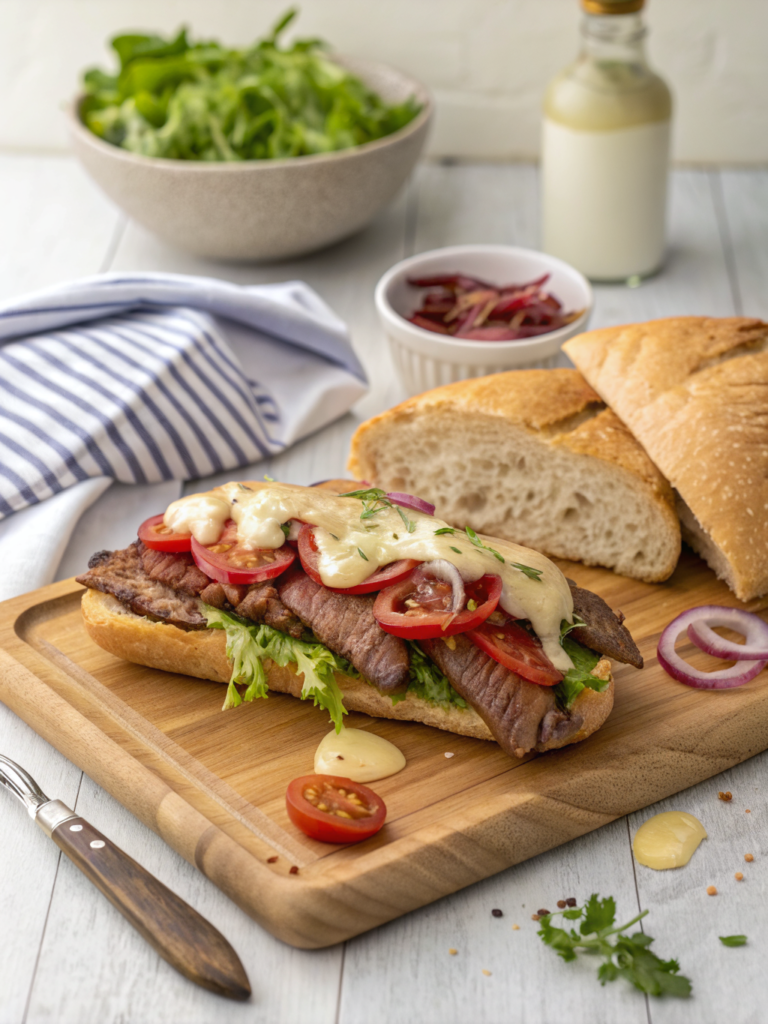
- Taco night twist: Slice thin and serve in warm corn tortillas with pico de gallo, avocado crema, and pickled red onions.
- Asian-inspired bowl: Serve over steamed jasmine rice with sautéed bok choy, sesame seeds, and a drizzle of teriyaki glaze.
- Steak salad: Slice and serve over arugula with cherry tomatoes, shaved parmesan, and a lemon vinaigrette for a light, elegant option.
- Chimichurri pairing: Top with fresh Argentine chimichurri sauce — the bright, herby flavors complement the rich, beefy notes perfectly.
For wine pairing, a bold Malbec or Cabernet Sauvignon complements the steak’s rich flavor profile beautifully. For a non-alcoholic option, a sparkling water with a squeeze of lemon cleanses the palate between bites.
Common Mistakes to Avoid
Even experienced cooks make avoidable errors when preparing steak. Here are the most common mistakes and exactly how to sidestep them.
- Cooking cold steak: Never place a cold steak directly from the fridge onto a hot pan. The exterior overcooks before the interior reaches the desired temperature. Always rest at room temperature first.
- Skipping the dry pat: Surface moisture creates steam instead of a sear. Always pat your steak completely dry before applying seasoning or oil.
- Moving the steak too much: Resist the urge to poke, press, or flip repeatedly. One flip is ideal for maximum crust development.
- Guessing doneness: Visual cues alone are unreliable. Invest in a quality instant-read thermometer — it’s the most accurate way to hit your target temperature.
- Skipping the rest: Cutting immediately after cooking causes juice loss. A proper rest period is non-negotiable for a juicy result.
- Slicing with the grain: This is perhaps the most common mistake. Always identify and cut against the grain for maximum tenderness.
- Over-marinating: Acidic marinades break down proteins over time. More than 4 hours can turn your steak’s texture unpleasantly soft and mushy.
Storing Tips for the Recipe
Proper storage ensures your leftover steak stays flavorful and safe to eat. Follow these best practices to make the most of any extras.
Refrigerating: Allow the steak to cool completely before storing. Wrap tightly in plastic wrap or place in an airtight container. Refrigerate for up to 3–4 days. Avoid storing with sauces or marinades already applied, as they can alter the texture over time.
Freezing: For longer storage, wrap individual portions in plastic wrap and then in aluminum foil before placing in a freezer-safe bag. Properly frozen flat iron steak maintains quality for up to 3 months. Label with the date to track freshness.
Reheating: The best method for reheating steak without drying it out is the low-and-slow oven method. Place slices on a baking sheet, cover with foil, and warm at 250°F for 20–25 minutes. Alternatively, reheat briefly in a hot skillet with a splash of beef broth to restore moisture.
Meal prep tip: Season and marinate your steak up to 24 hours in advance and store it in the refrigerator. This not only saves time on cooking day but also deepens the flavor profile significantly.
Conclusion
From selecting the right cut to slicing against the grain, this complete flat iron steak recipe covers every detail you need to cook a truly spectacular steak at home. The 7 secrets — room temperature resting, dry patting, high-heat searing, butter basting, thermometer use, proper resting, and