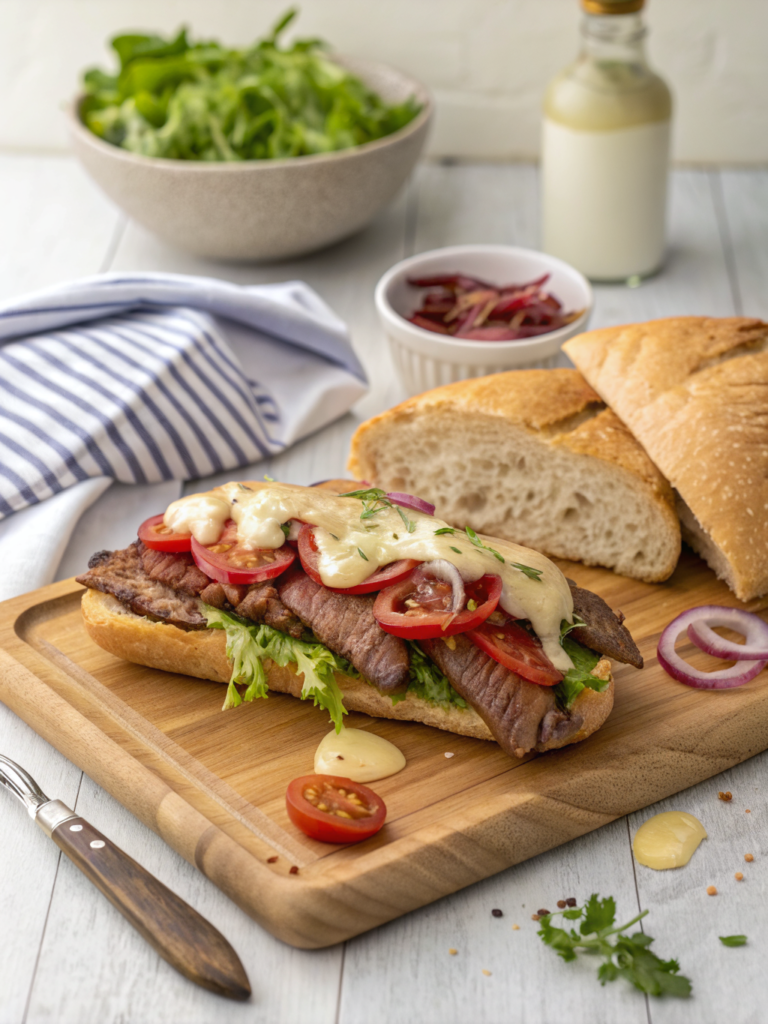
5 Expert Steps: Best Beef Striploin Steak Recipe
“`html
5 Expert Steps: Best Beef Striploin Steak Recipe
What if everything you thought you knew about cooking the perfect steak at home was holding you back? Most home cooks either overcook or undercook their steaks, missing that restaurant-quality result by just a few degrees. This beef striploin steak recipe changes everything. With just five expert steps, you’ll achieve a beautifully seared, juicy, and flavor-packed striploin every single time — no fancy equipment required.
The beef striploin, also known as the New York strip, is one of the most beloved cuts among steak enthusiasts. It strikes the perfect balance between tenderness and bold, beefy flavor. Whether you’re cooking for a weeknight dinner or an impressive weekend feast, this guide has you covered from start to finish.
Ingredients List
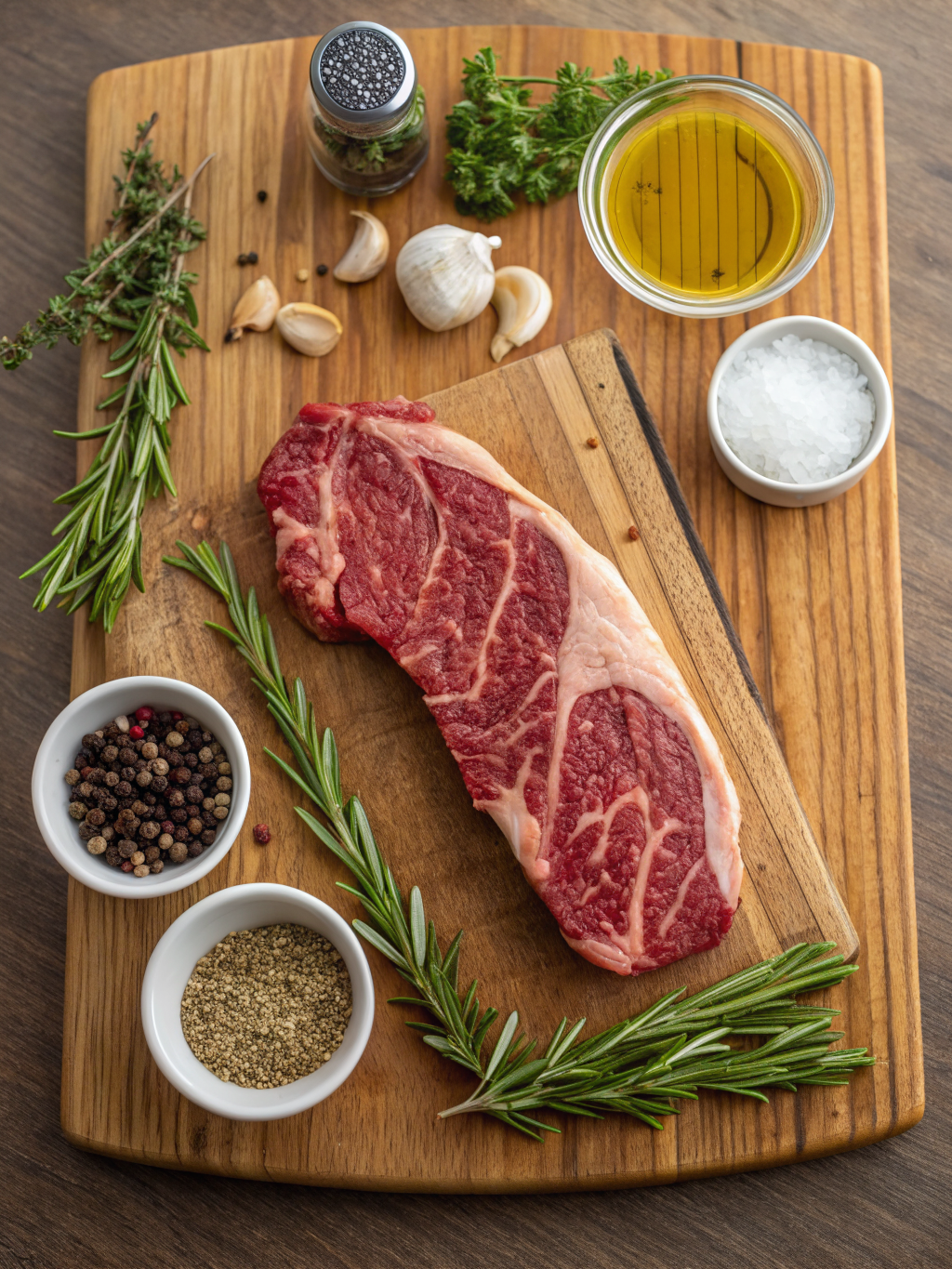
Gathering the right ingredients is the foundation of any great dish. For this recipe, simplicity is the secret weapon. Quality ingredients do the heavy lifting, so don’t skimp on the steak itself.
- 2 beef striploin steaks (about 1–1.5 inches thick, 10–12 oz each) — look for good marbling for maximum flavor
- 2 tablespoons olive oil — or substitute with avocado oil for a higher smoke point
- 2 tablespoons unsalted butter — substitute with ghee for a nuttier, dairy-sensitive alternative
- 4 garlic cloves, lightly crushed — garlic powder (½ tsp) works in a pinch
- 3–4 sprigs fresh rosemary and thyme — dried herbs can substitute at half the quantity
- 1½ teaspoons coarse kosher salt — sea salt or flaky Maldon salt are excellent alternatives
- 1 teaspoon freshly cracked black pepper — don’t use pre-ground; freshly cracked makes a noticeable difference
- ½ teaspoon smoked paprika (optional) — adds a subtle depth and color to the crust
Pro tip: Always choose USDA Choice or Prime grade striploin for the best results. The fat marbling throughout the meat melts during cooking, naturally basting the steak from the inside out.
Timing
One of the biggest advantages of this recipe is how quickly it comes together without sacrificing quality.
- Preparation Time: 35 minutes (including 30 minutes resting at room temperature)
- Active Cooking Time: 10–12 minutes
- Resting Time After Cooking: 5 minutes
- Total Time: Approximately 50–55 minutes
That’s roughly 30% less total time than the average steak recipe that calls for oven finishing. This stovetop method is efficient, precise, and delivers consistent results every time.
Step-by-Step Instructions
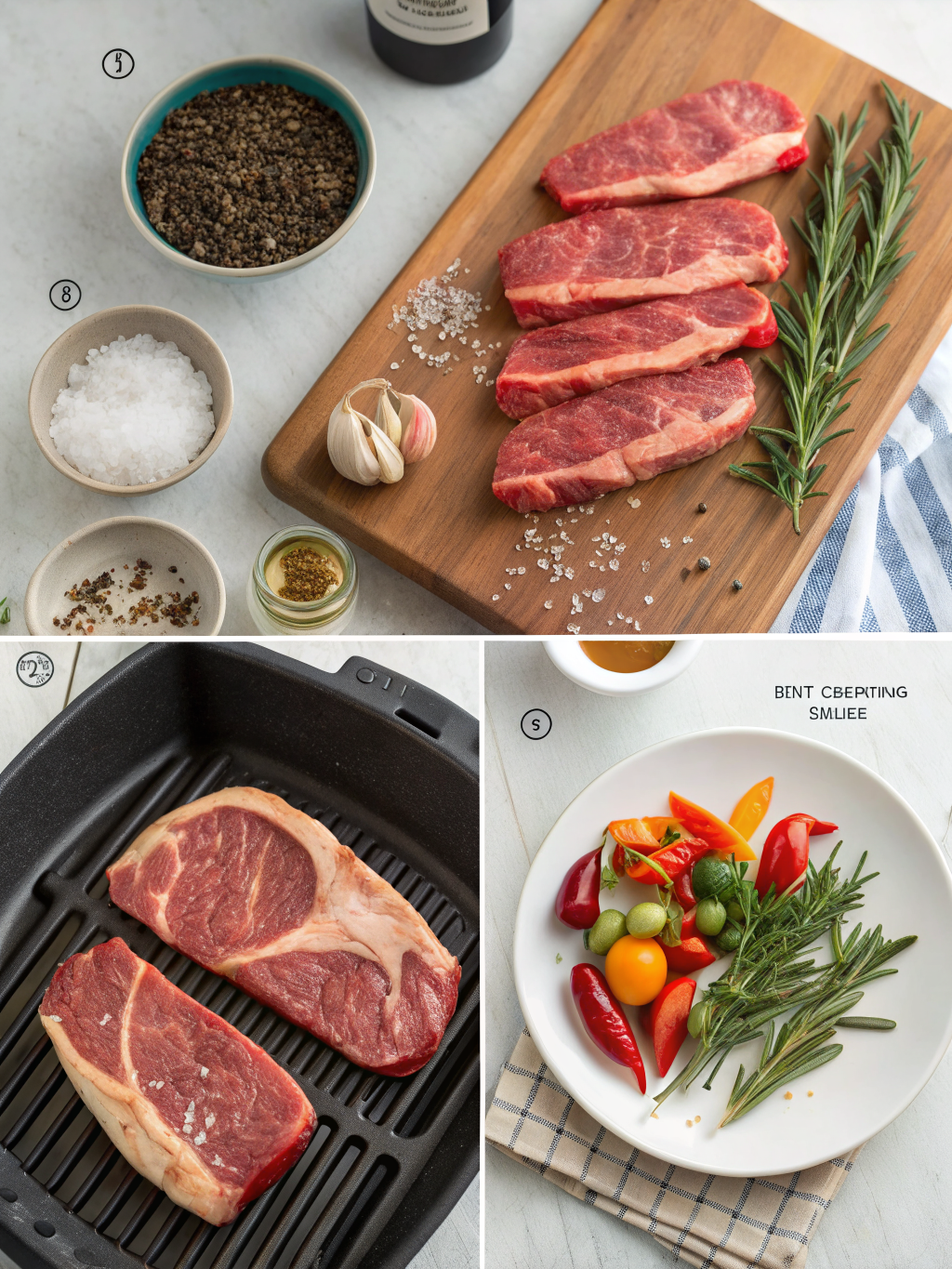
Follow these five expert steps carefully. Each one builds on the last, and skipping any step can compromise your final result. Trust the process — it’s been tested and perfected.
Step 1: Bring the Steak to Room Temperature
Remove your striploin steaks from the refrigerator at least 30 minutes before cooking. Cold meat hitting a hot pan creates uneven cooking — the outside chars while the inside stays cold. Allowing the steak to rest at room temperature ensures even heat distribution throughout the cook.
Pat the steaks completely dry with paper towels. Moisture is the enemy of a great sear. Any surface water will steam the steak instead of searing it, robbing you of that gorgeous, caramelized crust.
Step 2: Season Generously
Season both sides and the edges of each steak with kosher salt, cracked black pepper, and smoked paprika if using. Press the seasoning firmly into the meat so it adheres well. Don’t be shy — a thick striploin needs bold seasoning to penetrate the surface.
For an even deeper flavor, season the steaks up to 24 hours in advance and leave them uncovered in the refrigerator. This dry-brining technique draws out moisture, then reabsorbs it — concentrating flavor and improving the crust significantly.
Step 3: Preheat Your Pan to the Right Temperature
Place a heavy cast-iron skillet or stainless steel pan over high heat for 2–3 minutes until it’s smoking hot. Add the olive oil and swirl to coat. A properly preheated pan is the single most important factor in achieving a restaurant-quality crust on your beef striploin steak recipe.
Do not use a non-stick pan for this recipe. Non-stick coatings cannot withstand the high temperatures needed for a proper sear and may release harmful fumes. Cast iron retains heat beautifully and creates an unmatched crust.
Step 4: Sear to Perfection
Carefully lay the steaks away from you into the hot pan. You should hear an immediate, aggressive sizzle — that’s the Maillard reaction happening, creating hundreds of complex flavor compounds. Sear for 3–4 minutes without moving the steak.
Flip once and sear the other side for another 3–4 minutes. For a pan seared beef striploin steak that’s medium-rare, aim for an internal temperature of 130–135°F (54–57°C). Use an instant-read thermometer for accuracy — it’s the most reliable tool in your steak-cooking arsenal.
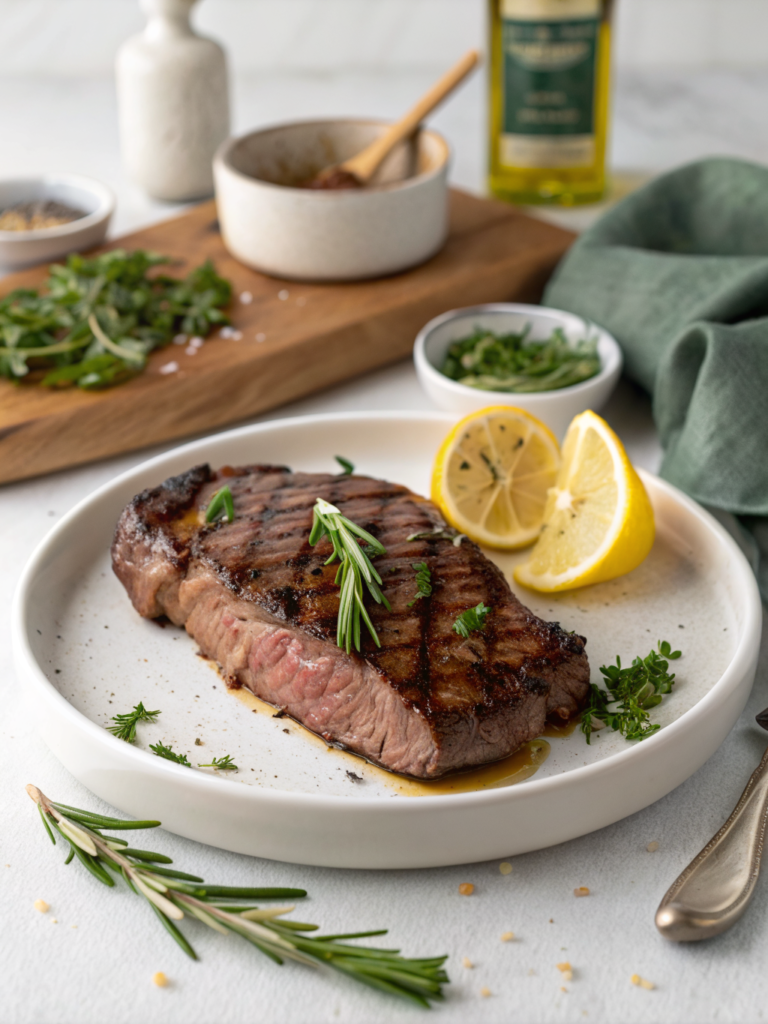
In the last 90 seconds of cooking, add the butter, crushed garlic, and fresh herb sprigs. Tilt the pan slightly and use a spoon to continuously baste the steak with the fragrant, bubbling butter. This step elevates the flavor dramatically.
Step 5: Rest Before Serving
Transfer the steaks to a cutting board and tent loosely with foil. Let them rest for at least 5 minutes. Resting allows the muscle fibers to relax and the juices to redistribute throughout the meat. Cut too soon, and all those precious juices will flood your cutting board instead of staying in the steak.
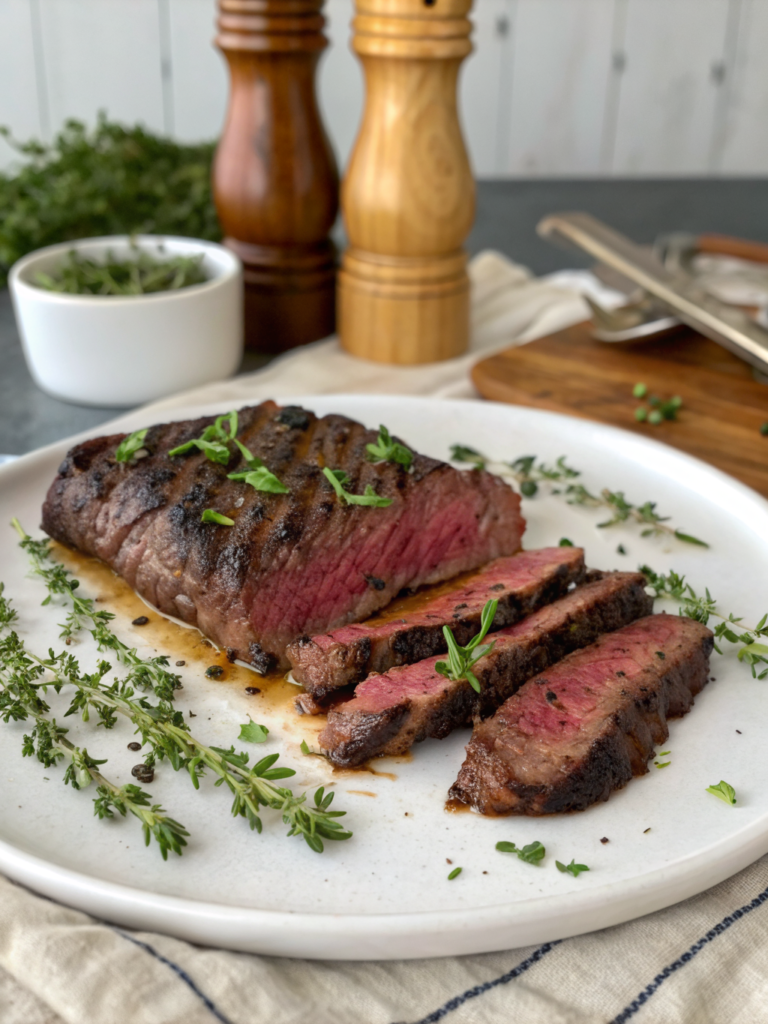
Slice against the grain for maximum tenderness. The grain runs lengthwise on a striploin, so cut perpendicular to those muscle fibers for the most tender bite possible.
Nutritional Information
This beef striploin steak recipe is not only delicious but also a nutrient-dense meal. The following values are approximate per serving (one 10 oz cooked steak with butter basting):
- Calories: 620–680 kcal
- Protein: 52–58g — an excellent source of complete protein with all essential amino acids
- Total Fat: 44g (Saturated Fat: 18g)
- Carbohydrates: 1g (virtually zero carbs, making it keto-friendly)
- Cholesterol: 165mg
- Sodium: 780mg (varies with seasoning)
- Iron: 20% of Daily Value — beef is one of the richest dietary sources of heme iron
- Zinc: 45% of Daily Value — critical for immune function and metabolism
- Vitamin B12: 110% of Daily Value — essential for neurological health
Striploin steak is a powerhouse of bioavailable nutrients. Research consistently shows that the protein and iron in red meat are more efficiently absorbed by the body compared to plant-based sources.
Healthier Alternatives for the Recipe
Want to enjoy this dish with a lighter nutritional profile? Several smart swaps can reduce calories and saturated fat without sacrificing the flavors you love.
- Reduce butter: Use just 1 tablespoon of butter or replace entirely with a drizzle of extra virgin olive oil for heart-healthy monounsaturated fats.
- Opt for grass-fed beef: Grass-fed striploin contains higher levels of omega-3 fatty acids and conjugated linoleic acid (CLA) compared to grain-fed beef.
- Reduce sodium: Cut the salt by half and add a squeeze of fresh lemon juice after cooking for brightness without extra sodium.
- Trim visible fat: Before cooking, trim the thick fat cap to reduce overall saturated fat content while keeping the flavor intact.
- Portion control: Use a 6 oz steak instead of 10 oz and pair with extra vegetables to create a balanced, lower-calorie plate.
For those following a Whole30 or paleo diet, simply omit the butter and use ghee or coconut oil instead. The recipe remains fully compliant and equally delicious.
Serving Suggestions
A perfectly cooked striploin deserves equally impressive accompaniments. The right sides can transform a great steak into an unforgettable meal.
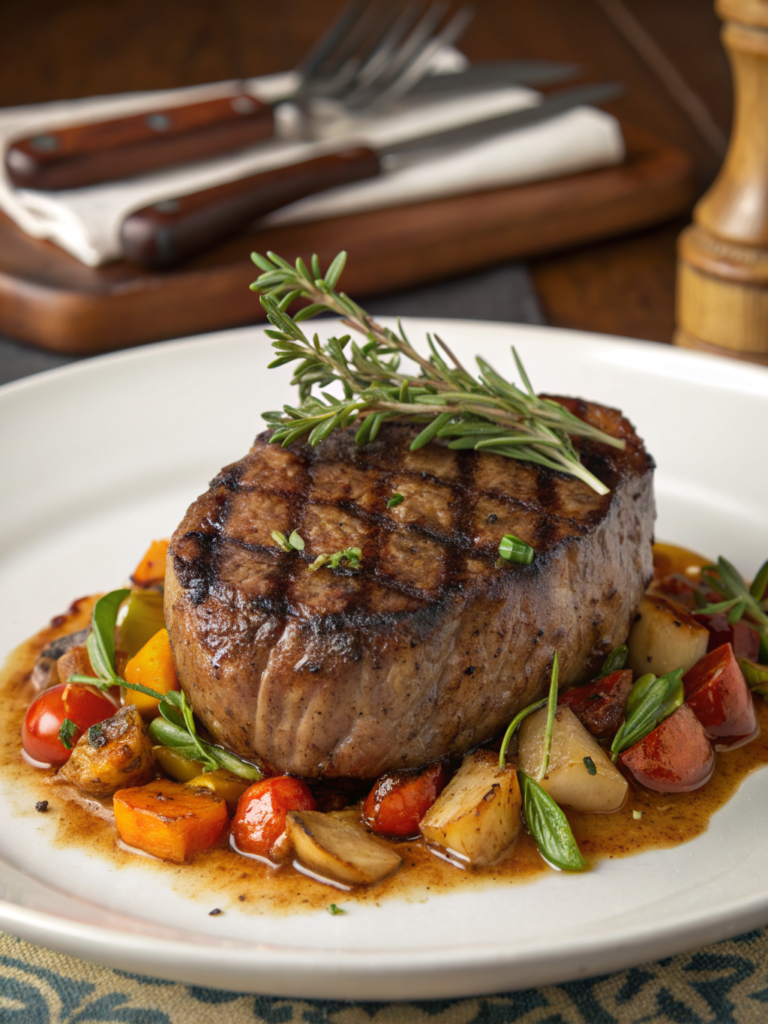
- Classic steakhouse pairing: Serve with creamy mashed potatoes, roasted asparagus, and a wedge salad with blue cheese dressing.
- Low-carb option: Pair with cauliflower mash, sautéed mushrooms, and a simple arugula salad dressed with lemon and olive oil.
- Sauce it up: Drizzle with a red wine reduction, chimichurri, or a simple garlic herb compound butter for an elevated presentation.
- Brunch twist: Slice the steak thin and serve over scrambled eggs with sourdough toast for a luxurious weekend brunch.
- Steak salad: Slice leftovers over a bed of mixed greens, cherry tomatoes, shaved parmesan, and balsamic glaze for a stunning next-day lunch.
For wine pairing, a bold Cabernet Sauvignon or Malbec complements the rich, beefy flavors of the striploin beautifully. For a non-alcoholic option, a sparkling water with a squeeze of citrus cleanses the palate between bites.
Common Mistakes to Avoid
Even experienced cooks fall into these common traps. Knowing what to avoid is just as important as knowing what to do.
- Cooking straight from the fridge: Cold steaks cook unevenly. Always allow 30 minutes at room temperature before cooking.
- Skipping the pat-dry step: Surface moisture prevents browning. Dry steaks sear; wet steaks steam. Always pat dry thoroughly.
- Using a cold pan: A pan that isn’t properly preheated produces a gray, steamed exterior instead of a caramelized crust.
- Moving the steak too often: Resist the urge to flip repeatedly. One flip is all you need for an even, beautiful sear on each side.
- Cutting without resting: Slicing immediately after cooking causes juice loss of up to 40%. Always rest for at least 5 minutes.
- Guessing doneness: Relying on the “poke test” is unreliable. Invest in an instant-read thermometer for precise, consistent results.
- Over-seasoning with garlic too early: Adding garlic directly to the pan from the start causes burning and bitterness. Add it in the final basting stage only.
Storing Tips for the Recipe
Proper storage ensures your leftover steak stays delicious and safe to eat. Follow these best practices to preserve quality.
Refrigerating leftovers: Allow the cooked steak to cool to room temperature (no longer than 2 hours). Wrap tightly in plastic wrap or store in an airtight container. Refrigerate for up to 3–4 days.
Freezing: For longer storage, wrap individual steaks in plastic wrap, then in aluminum foil, and place in a freezer-safe bag. Freeze for up to 3 months. Label with the date for easy tracking.
Reheating without drying out: The best method is low and slow. Place the steak on a wire rack over a baking sheet and warm in a 250°F (120°C) oven for 20–25 minutes until heated through. Finish with a quick 60-second sear in a hot pan to revive the crust.
Meal prep tip: Season your steaks up to 24 hours ahead and store uncovered in the refrigerator for the dry-brine effect. This saves active prep time on cooking day and actually improves the final result.
Conclusion
Mastering this beef striploin steak recipe comes down to five non-negotiable steps: bringing the steak to room temperature, seasoning boldly, preheating your pan properly, searing with confidence, and resting before slicing. Each step plays a critical role in the final outcome.
The striploin is a forgiving, flavorful cut that rewards patience and attention to detail. With the right technique, you’ll produce a steak that rivals any high-end restaurant — right in your own kitchen, at a fraction of the cost.</p