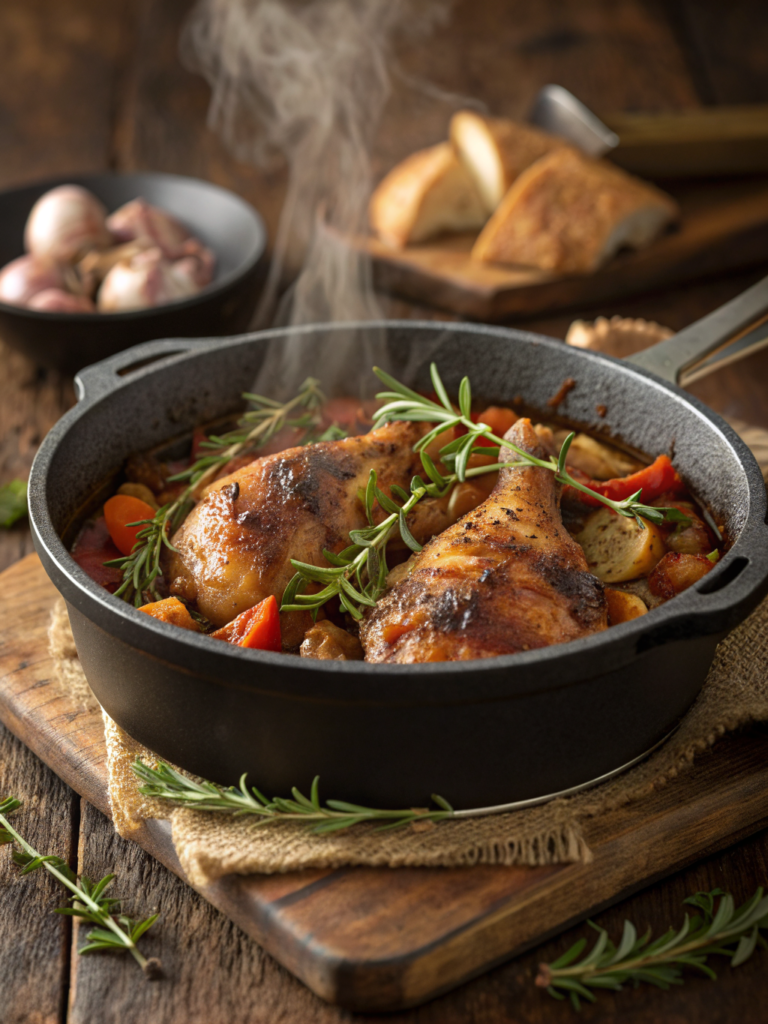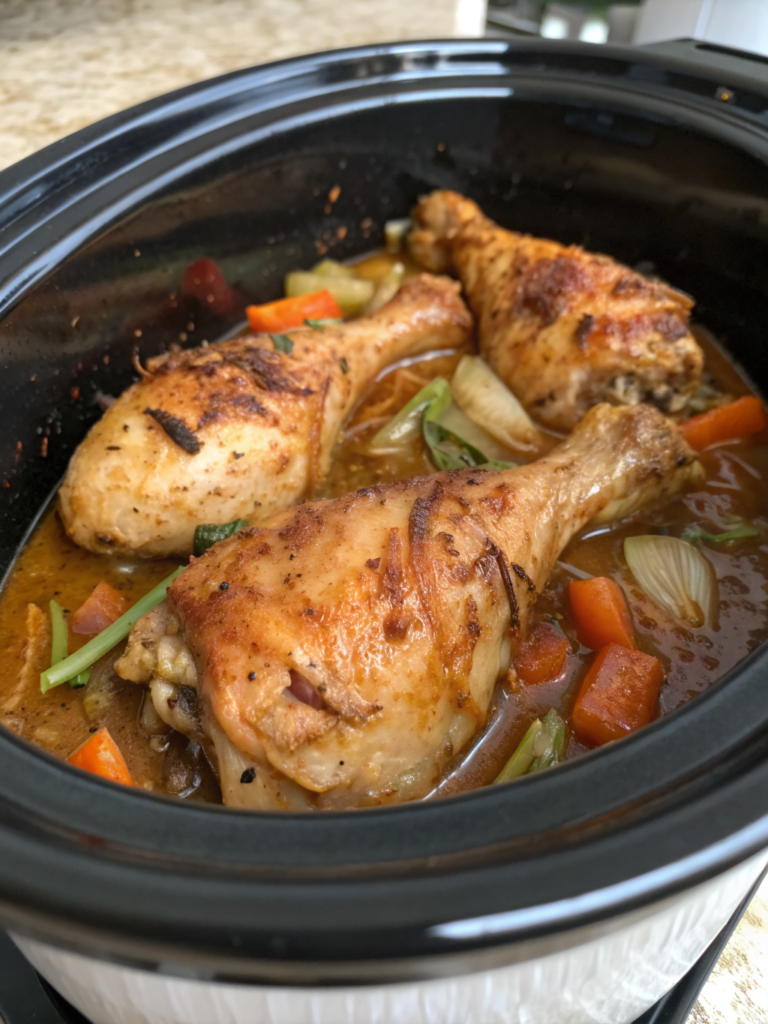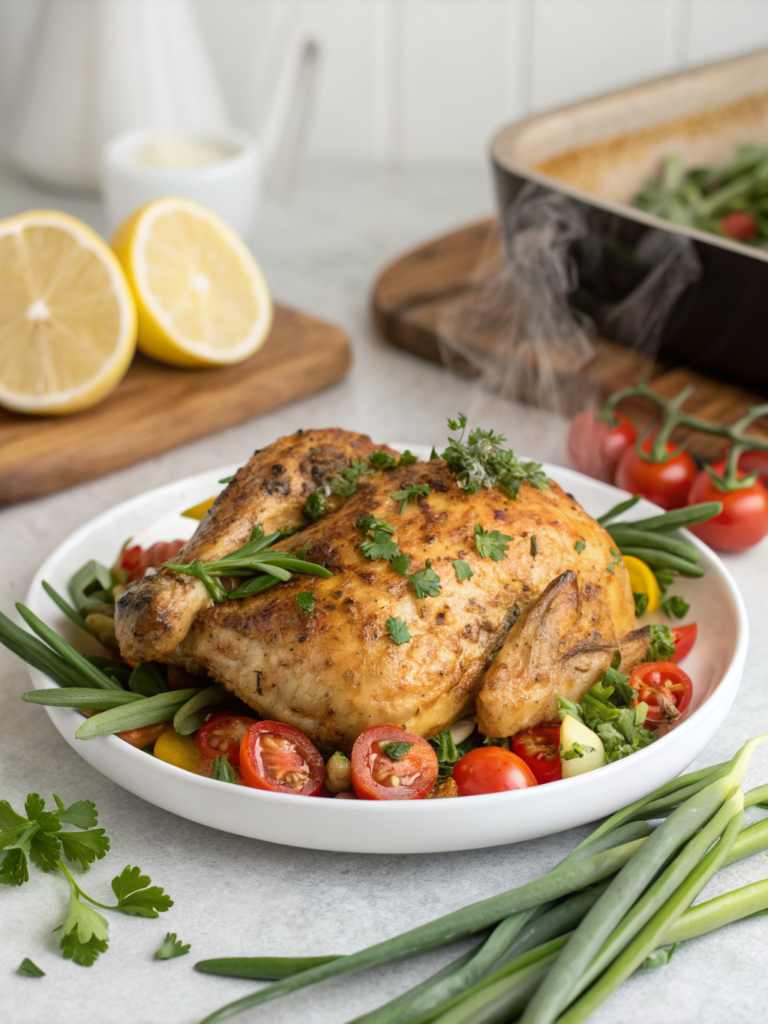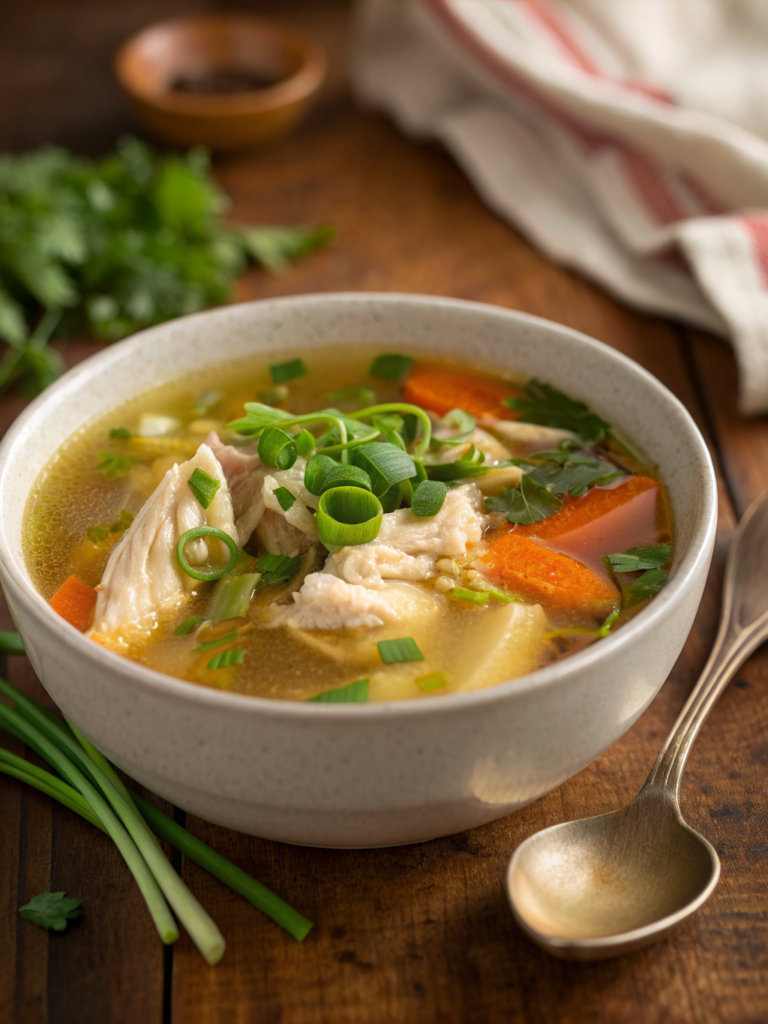
How to Roast a Chicken: Crisp Skin, Juicy Meat
What if everything you’ve been told about basting your bird is actually the reason your skin turns out pale and rubbery? It’s true — every time you crack open that oven door to spoon on drippings, you drop the cavity temperature by up to 50°F and steam the very skin you’re trying to crisp.
Learning how to roast a chicken properly isn’t about fancy equipment or French technique. It’s about three variables: dry skin, high heat, and resting time. Master those, and you’ll pull a shatteringly crisp, golden bird from your oven every single time — no trussing degree required. This roast chicken recipe delivers restaurant results with pantry staples.
Ingredients List
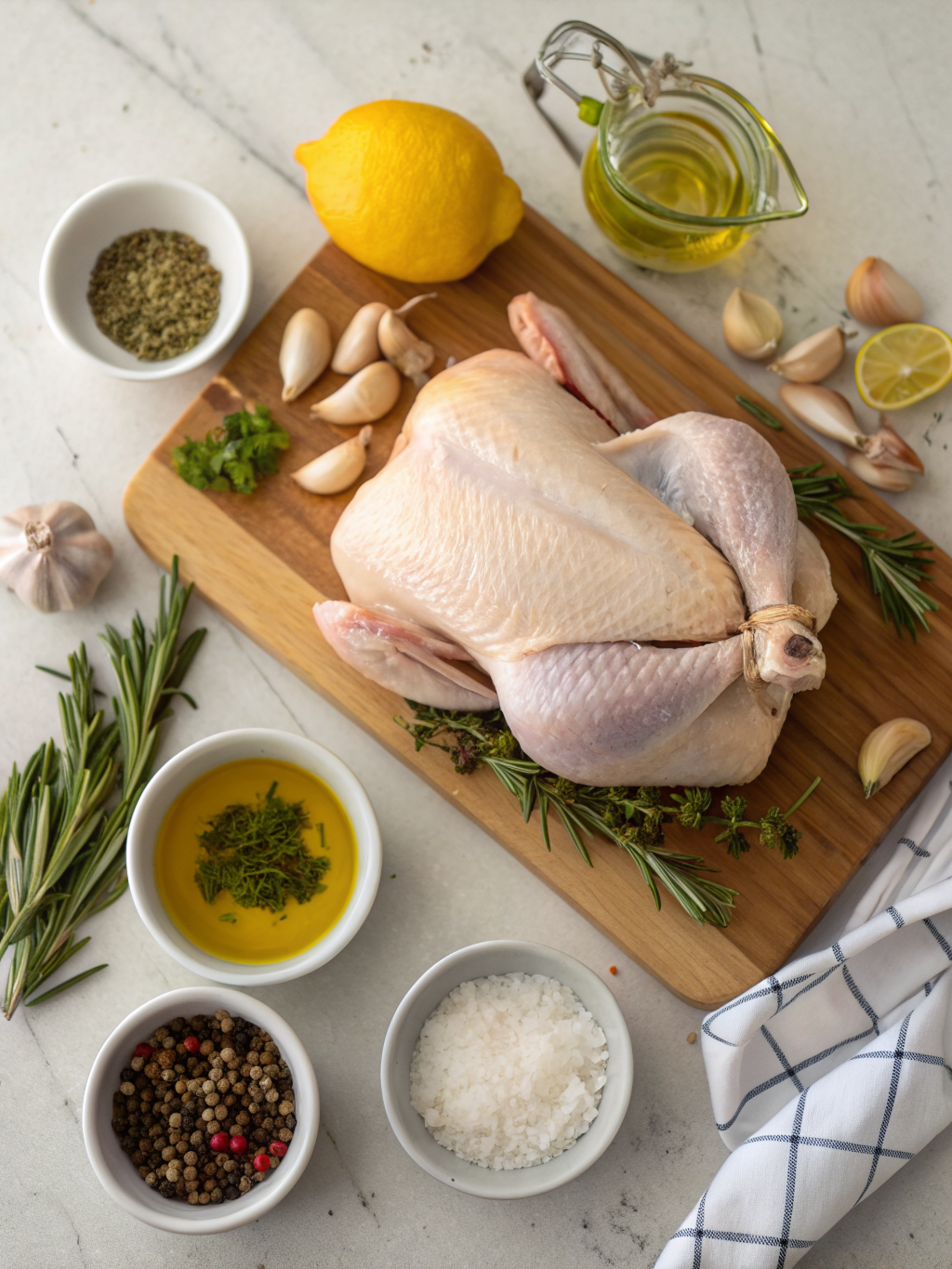
Simplicity is the secret weapon here. A great oven roasted whole chicken needs fewer than ten ingredients — but each one earns its place.
- 1 whole chicken (4–5 lbs / 1.8–2.3 kg) — air-chilled if available; it holds roughly 10% less water, which means dramatically crispier skin. Substitution: two 2.5-lb cornish hens (reduce roasting time by 25 minutes).
- 1 tbsp kosher salt — coarse flakes draw moisture from the skin like a magnet. Substitution: 2 tsp fine sea salt (fine salt is denser, so use less).
- 1 tsp freshly cracked black pepper — grind it yourself; pre-ground loses its piney bite within weeks.
- 3 tbsp unsalted butter, softened — milk solids brown beautifully under the skin. Substitution: olive oil, ghee, or duck fat for dairy-free.
- 1 lemon, halved — its steam perfumes the breast meat from the inside out.
- 1 whole head of garlic, sliced crosswise — roasts into sweet, jammy cloves you can smear on bread.
- 4 sprigs fresh thyme + 2 sprigs rosemary — Substitution: 1 tsp each dried, rubbed between your palms to wake up the oils.
- 1 lb baby potatoes, 2 carrots, 1 onion (optional) — for a one-pan roast chicken with vegetables that soak up every drop of golden fat.
- 1 tbsp olive oil — for tossing the vegetables.
Timing
Prep time: 15 minutes (plus optional 12–24 hours uncovered dry-brining in the fridge)
Cook time: 70 minutes
Rest time: 15 minutes
Total active time: 100 minutes
That’s roughly 20% faster than the average roast chicken recipe, which clocks in around 2 hours thanks to lower oven temperatures and constant basting. Our high-heat method also cuts moisture loss: USDA data shows birds roasted at 425°F lose about 18% of their weight, versus 24% at prolonged low heat.
Wondering how long to roast a chicken by weight? Budget 15 minutes per pound at 425°F, plus 15 minutes. A 4-lb bird needs roughly 75 minutes. Always confirm with a thermometer, not a clock.
Step-by-Step Instructions
Step 1: Dry the Bird Aggressively
Remove the chicken from its packaging, pull out the giblets, and pat every surface bone-dry with paper towels — inside the cavity too. Water is the enemy of crispy skin roast chicken. Moisture must evaporate before browning can begin, and that evaporation costs you precious oven energy.
Step 2: Dry-Brine for Maximum Flavor
Season the bird generously with kosher salt and pepper, inside and out. Place it uncovered on a rack over a plate and refrigerate 12–24 hours. The salt dissolves, penetrates, and then the fridge’s circulating air dehydrates the skin into a paper-thin shell. Short on time? Even 45 minutes helps noticeably.
Step 3: Preheat Properly
Set your oven to 425°F (220°C) and let it preheat a full 25 minutes — most ovens beep 10 minutes before they’ve truly stabilized. If using a cast-iron skillet or roasting pan, slide it in to heat as well. A hot pan jump-starts thigh browning.
Step 4: Butter Under the Skin
Gently slide your fingers between the breast skin and meat to create a pocket. Push softened butter and half the herbs directly onto the meat. This bastes from the inside, keeping the lean breast juicy while the exterior crisps — the single highest-impact trick in how to roast a chicken.
Step 5: Stuff and Tie
Tuck the lemon halves, garlic head, and remaining herbs into the cavity. Tie the legs together with kitchen twine and tuck the wingtips behind the shoulders. Trussing creates a compact shape so the thighs and breast finish cooking within minutes of each other.
Step 6: Build the Vegetable Bed (Optional)
Toss potatoes, carrots, and onion wedges with olive oil, salt, and pepper. Scatter them in the hot pan and set the chicken directly on top, breast-side up. The bird becomes its own roasting rack, and the vegetables confit in rendering fat.
Step 7: Roast Without Peeking
Roast 60–75 minutes, resisting all urges to open the door. The ideal roast chicken temperature is 165°F (74°C) in the thickest part of the breast and 175°F (79°C) in the thigh, measured away from bone. Carryover cooking will add another 5°F during resting.
Step 8: Rest, Then Carve
Transfer to a cutting board and rest 15 minutes, loosely tented — never tightly wrapped, which steams the skin soft. Resting lets muscle fibers relax and reabsorb juices; carving immediately can cost you up to 30% more liquid on the board.
Nutritional Information
Per serving (approximately ¼ of a 4-lb chicken, with skin, no vegetables):
- Calories: 435 kcal
- Protein: 48 g — nearly 96% of the daily target for a 150-lb adult
- Total fat: 26 g (7 g saturated)
- Carbohydrates: 1 g
- Sodium: 620 mg (varies with brining time)
- Selenium: 42 mcg (76% DV) — a key antioxidant mineral
- Niacin (B3): 14 mg (88% DV)
- Phosphorus: 350 mg (28% DV)
Removing the skin before eating drops calories to roughly 285 and total fat to 9 g. Adding the vegetable bed contributes about 140 calories and 4 g of fiber per serving.
Healthier Alternatives for the Recipe
Swap butter for extra-virgin olive oil to trade saturated fat for heart-friendly monounsaturated fat — you’ll lose a little browning but gain a fruity, peppery finish.
Cut sodium by 40% using a half-salt, half-herb rub built on smoked paprika, garlic powder, lemon zest, and sumac. The acidity tricks the palate into perceiving more salt than is present.
For a lower-carb version, replace potatoes with cauliflower florets, radishes, and fennel wedges. Radishes lose their bite entirely when roasted and mimic potato texture at one-fifth the carbohydrates.
Whole30 and paleo cooks can use ghee or avocado oil, while anyone watching fat can roast on a rack and discard the drippings rather than making pan gravy.
Serving Suggestions
Carve the bird into eight pieces and arrange over the roasted vegetables on a warm platter — a cold platter sucks heat out in under two minutes. Spoon pan juices over the meat only, never the skin.
Pair with a bright counterpoint: shaved fennel and arugula salad with lemon vinaigrette, or a sharp chimichurri. Fat loves acid, and the contrast keeps every bite feeling fresh.
For a weeknight crowd, serve with crusty sourdough for mopping garlic cloves and pan drippings. For Sunday dinner, add creamy polenta or buttered egg noodles. Leftover shreds make unbeatable tacos, grain bowls, and chicken salad sandwiches.
Common Mistakes to Avoid
- Roasting a cold bird. Straight-from-the-fridge chicken cooks unevenly. Let it sit at