Chicken Brine Recipe: A Simple Wet Brine for Juicy Chicken
A brine is salt dissolved in water, and chicken soaks in it before cooking. That is the entire idea. What matters is the amount of salt and the time, because too little does nothing and too much leaves you with chicken that is salty and spongy.
Below is the ratio I use for chicken pieces, how long to leave each cut in, and the situations where you should skip the wet brine altogether.
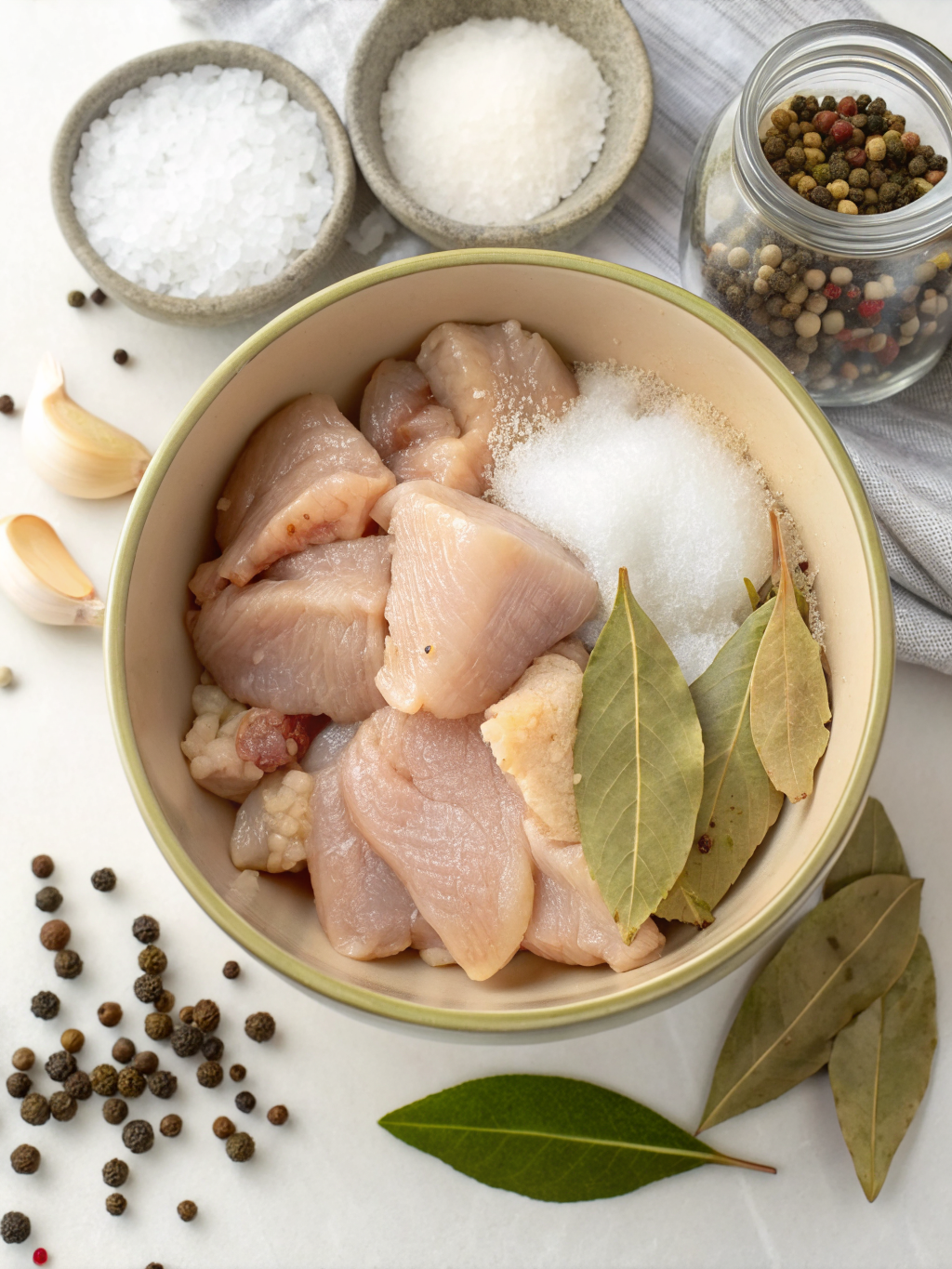
What a brine does
Salt changes the proteins in the muscle so they hold more water. The chicken loses less moisture while it cooks, so it ends up juicier, and it is seasoned inside rather than only on the surface. It helps lean cuts the most. Breast meat dries out fast, and a short brine gives you a wider margin.
It will not rescue chicken that is cooked well past 165°F. A thermometer matters more than the brine.

The salt ratio
Use about 70 grams of salt per 4 cups (1 liter) of water. That is roughly a 7 percent solution, which works for the short soaking times below. Salt brands are different sizes, so weighing is the most reliable method. By volume, for 4 cups of water:
- Fine table salt: ¼ cup
- Morton kosher salt: about 5 tablespoons
- Diamond Crystal kosher salt: about ½ cup
Add 2 tablespoons of sugar if you like. It helps browning a little and takes the edge off the salt, but it is optional.
How long to brine each cut
- Boneless, skinless breasts: 30 to 45 minutes.
- Bone-in breasts, thighs and drumsticks: 45 to 60 minutes.
- Wings and tenders: 20 to 30 minutes.
- Never longer than 90 minutes at this strength. The texture turns soft and the chicken tastes like ham.
Keep the container in the fridge the whole time. The brine has to be completely cold before the chicken goes in, so if you heat the water to dissolve the salt, cool it first.
After the brine
Lift the chicken out and pat it very dry with paper towels. You do not need to rinse it, and rinsing raw chicken just spreads bacteria around the sink. If you want crisp skin, put it on a rack in the fridge, uncovered, for an hour before cooking.
Go easy on the salt in everything else. Brined chicken is already seasoned, so season the rub lightly and taste the pan sauce before you add any more.
When not to use a wet brine
- Chicken labeled as containing a solution. Packages that say something like "contains up to 15% chicken broth" or "enhanced" are already injected with salt water. Brining them makes them far too salty.
- A whole bird. It needs a larger container and a lot of fridge space. A dry brine is easier: salt it and leave it uncovered in the fridge for 24 hours. The roast chicken guide covers it.
- Kosher chicken. It has already been salted during processing.
Flavor options
The basic brine is plenty. If you want to add something, a few smashed garlic cloves, a couple of bay leaves, a teaspoon of black peppercorns, strips of lemon peel or a sprig of thyme are all fine. They add a light aroma more than a strong flavor, so do not expect much from them. Most of the seasoning will still come from what you put on the outside.
Basic Chicken Brine
A simple wet brine for about 2 pounds of chicken pieces. Double it for 4 pounds.
Ingredients
- 4 cups (1 liter) cold water
- 70 g salt (¼ cup fine salt, 5 tbsp Morton kosher or ½ cup Diamond Crystal)
- 2 tablespoons sugar (optional)
- 3 garlic cloves, smashed (optional)
- 2 bay leaves (optional)
- 1 teaspoon black peppercorns (optional)
- About 2 lb (900 g) chicken pieces
Instructions
- Stir the salt and sugar into the water until it fully dissolves. Add the garlic, bay leaves and peppercorns if you are using them. If you warmed the water to dissolve the salt, chill the brine until it is cold.
- Submerge the chicken in a bowl or zip bag, making sure every piece is covered. Refrigerate.
- Brine for 30 to 45 minutes for boneless breasts, or 45 to 60 minutes for bone-in pieces. Do not go past 90 minutes.
- Lift out the chicken, discard the brine and pat the pieces very dry. Cook as you normally would, using less salt in the seasoning.
- Never reuse brine. Raw chicken has been in it.
- Skip this method for chicken labeled as enhanced or containing a solution.
Questions people ask
How long should I brine chicken?
For this strength, 30 to 45 minutes for boneless breasts and 45 to 60 minutes for bone-in pieces. A weaker brine can sit longer, but 90 minutes is the limit for this one.
Can I brine chicken overnight?
Not in this brine. It will be too salty and the meat will turn soft. For an overnight option, dry-brine it: rub salt on the chicken and leave it uncovered in the fridge.
What is the difference between a wet brine and a dry brine?
A wet brine soaks the chicken in salt water. A dry brine rubs salt directly on the surface. Both season the meat and help it keep moisture. Dry brining gives crisper skin and takes less room.
Do I need to rinse chicken after brining?
No. Pat it dry. Rinsing is not needed and splashes raw chicken juices around your sink.
More to cook
- Baked bone-in chicken breast
- Chicken thighs, crispy or tender
- How to roast a chicken
- Thin chicken breast recipes